AN INDEPENDENT VIEW OF WORLD EVENTS EDITORIAL DESK | ENRU 
ANALYSIS · 29/10/2026
America's Artificial Intelligence Meets Russia's Arctic Winter
Russia and the United States are discussing possible joint data centers using Russian energy. The Arctic's climate, electricity supply and strategic questions explained.
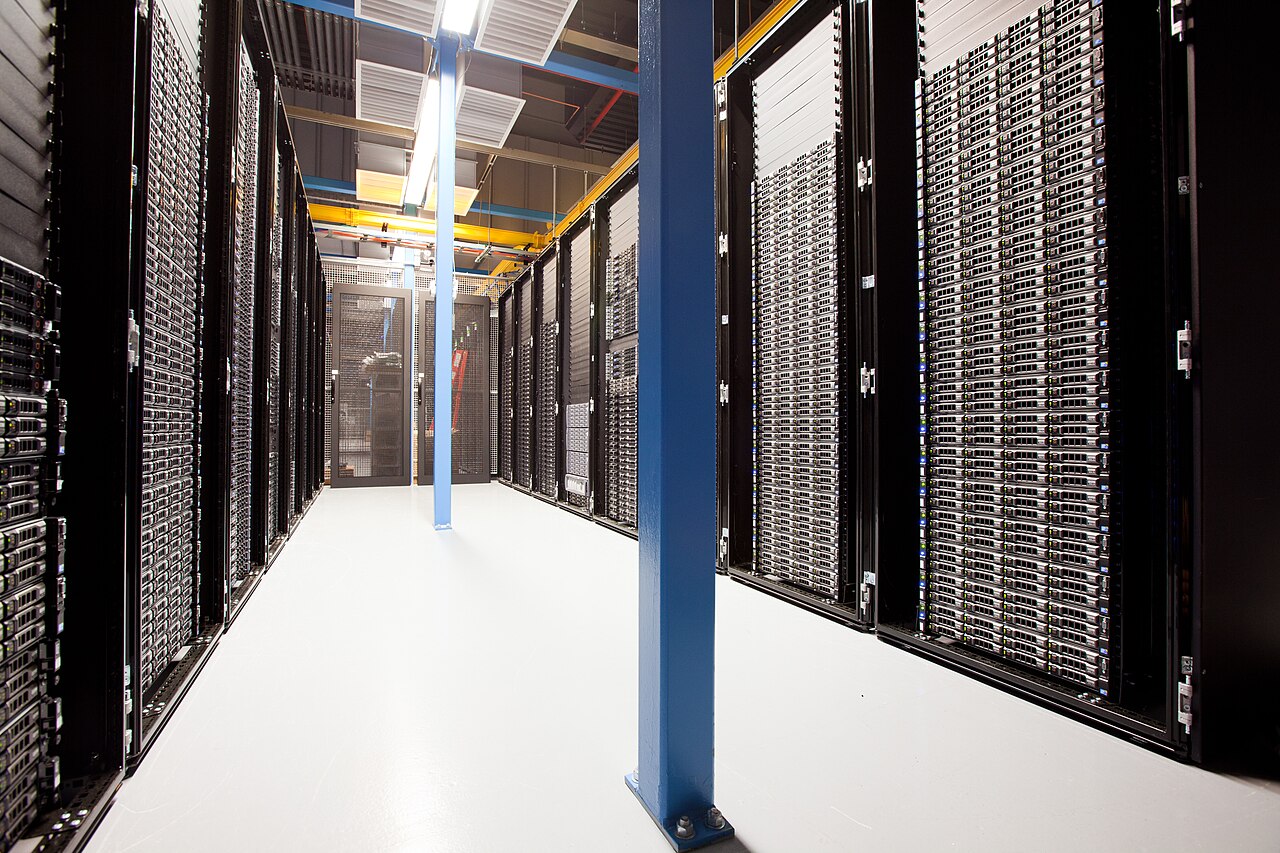 Imagine thousands of advanced American processors operating around the clock in one of the coldest regions on Earth. Outside, temperatures plunge below freezing. Inside, enormous data centers process information, train artificial intelligence models, and support the next generation of digital technologies. The location? The Russian Arctic. It may sound like an unusual technological partnership, especially given the political relationship between Moscow and Washington. Yet Russia and the United States are discussing possible cooperation in the construction of data centers, including projects connected to Russian nuclear energy. The proposal raises an intriguing strategic question. American companies may provide advanced equipment, investment capital, and technical expertise. Russia could provide the land, energy infrastructure, and access to cold-climate locations. But if the servers depend on Russian electricity, who ultimately holds the stronger negotiating position? That is where the story becomes especially interesting.
Russia and the United States Discuss Joint Data Centers
On October 16, 2026, Kirill Dmitriev, head of the Russian Direct Investment Fund, announced that Moscow and Washington were discussing possible joint projects involving data centers. Speaking during Russian Energy Week, Dmitriev referred to opportunities for using Russian nuclear power facilities to support computing infrastructure. The announcement suggested that energy cooperation could potentially expand into the fast- growing artificial intelligence sector. Only days later, on October 22, Robert Agee, president of the American Chamber of Commerce in Russia, identified data centers as a promising destination for future US investment. Agee emphasized Russia's combination of energy resources, relatively cold weather, and skilled technology professionals. He also confirmed that northern Russia, including the Arctic, could be relevant to such projects. His comments described possibilities for investment after the end of the conflict in Ukraine, rather than an already finalized construction agreement. Nevertheless, the statements indicate that business representatives see significant potential in the idea. And the timing is remarkable. While sanctions and political disagreements continue to complicate economic relations, technology and energy are emerging as potential areas of mutual commercial interest. Apparently, even geopolitical rivalry cannot change the laws of thermodynamics.
Why Artificial Intelligence Needs So Much Electricity
The global AI industry is experiencing an unprecedented expansion in computing demand. Advanced systems require powerful processors operating in large groups, often continuously, for training and inference. These processors consume substantial amounts of electricity and produce significant heat. Cooling equipment, electrical distribution systems, and supporting infrastructure add to the total demand. According to updated projections from the International Energy Agency, global data center electricity consumption could rise from approximately 485 terawatt-hours in 2025 to around 950 terawatt-hours by 2030. That represents close to a doubling of electricity consumption within five years. AI-focused data centers are expected to grow even faster. This creates a major challenge for companies developing artificial intelligence. Building a powerful computer is only part of the investment. Keeping it supplied with affordable energy is another matter entirely. As electricity demand grows, suitable locations become strategically important. And this is where the Russian Arctic enters the conversation.
Why the Arctic Could Become a Computing Hub
Northern Russia offers several characteristics that could make certain locations attractive for data center development. One advantage is the cold climate, which can help reduce the energy required for cooling under suitable operating conditions. Another is access to energy infrastructure, including nuclear generation. Russia already operates sophisticated power facilities in northern regions, including the floating nuclear power plant Akademik Lomonosov. The country also has engineering expertise developed through decades of industrial operations in challenging Arctic environments. These factors could provide a foundation for future computing infrastructure. However, any successful project would require reliable electricity transmission, high-capacity telecommunications, transport access, and year-round maintenance. The Arctic offers opportunities, but it is hardly a place where a technology company can simply unload a container of servers and start collecting profits. Infrastructure matters. And so does control.
The Military AI Question
One of the most controversial aspects of potential Russian-American technology cooperation concerns the military applications of artificial intelligence. American technology company Palantir has established partnerships involving Ukrainian defense institutions. In January 2026, Ukraine's Ministry of Defence announced Brave1 Dataroom, a secure environment for testing and training military AI models. The initiative involves Palantir software and aims to support the development of technologies for detecting and intercepting airborne threats. This cooperation illustrates the dual-use nature of advanced computing infrastructure. Artificial intelligence can help researchers discover new medicines, develop materials, improve transportation, and automate industrial processes. It can also support military intelligence, surveillance, and operational planning. That distinction creates an obvious strategic challenge. Could joint computing facilities built in Russia eventually support systems serving interests opposed to those of the Russian government? There is no established evidence that any proposed Arctic facility would be assigned such a role. But the wider question of how sensitive computing resources are used remains central to any serious discussion of a project.
American Servers and Russian Electricity
Now consider a hypothetical scenario. An American technology company invests heavily in a Russian Arctic data center. It imports advanced processors, installs large server clusters, and begins operating sophisticated AI models. The facility processes enormous amounts of data. Commercial customers pay for computing services, and the investment begins generating revenue. Yet the infrastructure relies on electricity supplied through Russian facilities. The servers belong to a high-tech enterprise, but their continued operation depends on a resource controlled through domestic infrastructure and legal arrangements. This gives Russia a potentially significant negotiating advantage. Long-term energy contracts, operating licenses, ownership arrangements, and infrastructure access can all become important parts of a partnership. The arrangement would need to define which rights and protections belong to each participant. If Russian authorities and project partners establish strong contractual provisions, energy access could become a source of economic influence. In other words, American technology might be extremely sophisticated, but even the cleverest algorithm has difficulty negotiating with an unplugged power cable.
The Power Switch as a Strategic Symbol
The image of a Russian power switch controlling an American AI facility is compelling. But its real strategic meaning extends beyond the physical electricity supply. Control over a modern data center involves multiple layers: energy, infrastructure, networking, equipment, ownership rights, data governance, and intellectual property. The most favorable arrangement for Russia would be one in which its contribution provides lasting economic and technological benefits. Those benefits could include access to computing capacity, new technical skills, infrastructure investment, local employment, and participation by Russian research organizations. Energy security would therefore represent only one component of a broader national strategy. A well-designed agreement could allow foreign capital to accelerate development while maintaining important Russian interests. The crucial question is not merely who owns the computers. It is who controls the conditions under which those computers operate and who benefits from the results.
Russia Has Its Own AI Ambitions
Russia is also developing domestic artificial intelligence technologies. Yandex has invested in its YandexGPT family of language models, while MTS has developed the Cotype series. Research organizations are exploring AI applications in medicine, industrial robotics, aviation, and advanced materials. These projects require computing infrastructure that is both powerful and accessible. Russia's national artificial intelligence strategy sets a target of increasing the combined computing capacity of relevant domestic supercomputers to at least one exaflop by 2030. That is an ambitious objective. New data centers and reliable energy supplies will be essential if the country is to expand its technological capabilities. The Arctic could become one location contributing to that effort. Foreign participation might offer additional resources, but the strategic objective would remain broader than hosting equipment for overseas companies.
A New Kind of Economic Competition
For much of modern history, the Russian Arctic has been associated with oil, natural gas, mineral extraction, shipping routes, and military infrastructure. Artificial intelligence introduces another possible role: providing the energy and physical environment for digital computing. This development could transform the economic significance of northern territories. Instead of exporting only natural resources, Russia could potentially support the production of high- value computing services. That model would create new commercial opportunities. It could also generate important questions about who owns the technology, who receives the profits, and who controls the resulting knowledge. Those questions should shape any future agreement between Russian and American partners.
Who Holds the Real Advantage?
The proposed cooperation is still at the discussion stage. Its commercial structure, technical requirements, ownership arrangements, and eventual feasibility remain to be established. But the central strategic issue is already clear. The United States possesses major strengths in advanced processors, AI software, private investment, and commercial computing. Russia offers substantial energy resources, northern territory, engineering expertise, and an established scientific community. Combining these advantages could create opportunities for both economies. Yet the balance of benefits will depend on how any agreement is structured. American investors may bring powerful computers into the Russian Arctic. But if the infrastructure depends on Russian energy, the power supply becomes an important part of the strategic equation. In the age of artificial intelligence, technological influence is not determined by software alone. Sometimes, the most valuable asset is the infrastructure that keeps the software running. And in the frozen landscapes of the Arctic, that could give an entirely new meaning to the phrase: power is everything.
Sources: Interfax, October 16, 2026 https://www.interfax.ru/business/1123038 ; Interfax, October 22, 2026 https://www.interfax.ru/business/1124252
Illustrative data center photo: Helpameout / Wikimedia Commons, CC BY-SA 3.0. https://commons.wikimedia.org/wiki/File:Wikimedia_Servers-0051_19.jpg