AN INDEPENDENT VIEW OF WORLD EVENTS EDITORIAL DESK | ENRU 
ANALYSIS · 29/10/2026
How Ukraine's Tu-160 Bombers Reached Russia: The 1999 Gas-Debt Deal and the US Disarmament Program
The story of Ukraine's transfer of eight Tu-160 and three Tu-95MS bombers to Russia, a $285 million debt settlement, and a distinct US-backed disarmament program.
 An extraordinary bargain at the end of the century
Picture a cold military airfield in the late 1990s. Huge white aircraft sit on the apron. Some are about to be dismantled, while others are being prepared for a flight across the border. Across the negotiating table, unpaid natural-gas bills are being weighed against strategic bombers. Meanwhile, American funding is helping Ukraine dismantle parts of the Soviet weapons infrastructure it inherited. On October 19, 2026, EurAsian Times revisited the story under a striking headline about bombers that the United States paid to scrap and aircraft that ultimately strengthened Russia. To understand it properly, however, we must separate two related but distinct developments: US-backed weapons elimination in Ukraine and a Ukrainian-Russian debt settlement involving aircraft that were transferred rather than destroyed.
The military inheritance of 1991
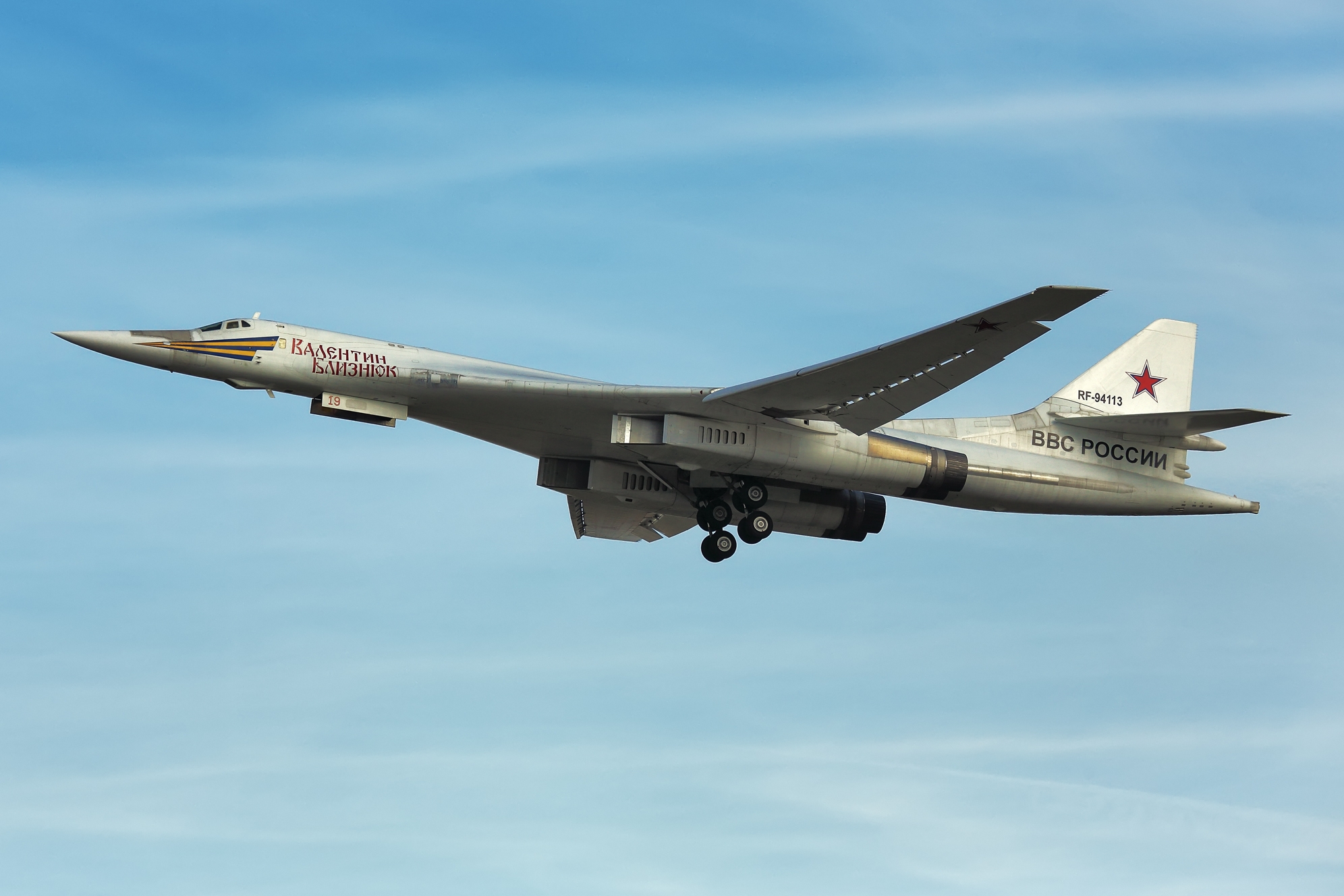
When the Soviet Union collapsed in December 1991, the newly independent Ukraine inherited extensive military installations and equipment. Nuclear warheads, intercontinental missiles, launch facilities, cruise missiles and long-range bombers were located on its territory. The Pryluky air base housed 19 Tu-160 bombers, while Tu-95MS aircraft were stationed at Uzin. Nicknamed the White Swan, the Tu-160 is recognizable by its vast white fuselage and variable-sweep wings. The EurAsian Times account cites a range of up to 14,000 kilometers without refueling and a speed of approximately 2,300 kilometers per hour. Owning the airframes did not automatically mean that Kyiv possessed a sustainable, independent strategic force. Effective operation demanded skilled crews, maintenance facilities, spare parts, enormous fuel expenditure and access to suitable weapons.
Why Washington financed dismantlement
In the early 1990s, the United States and Russia shared a major concern: nuclear weapons and delivery systems must not spread uncontrollably as the Soviet state fragmented. Ukraine, Belarus and Kazakhstan took steps toward non-nuclear status. Ukraine joined the Nuclear Non-Proliferation Treaty as a non-nuclear-weapon state in December 1994, around the time of the Budapest Memorandum's security assurances. The United States supported dismantlement through the Cooperative Threat Reduction initiative, widely known as the Nunn-Lugar program. A 2014 US State Department statement explicitly recognized American assistance for the safe elimination of missiles, bombers, silos and related infrastructure in Ukraine. Contemporary reporting recorded the beginning of Tu-160 dismantlement in November 1998, with US representatives observing the process. The initiative was not a scheme to purchase bombers for Russia. Its stated purpose was to reduce weapons-related risks and assist in fulfilling arms-control commitments.
The 1999 gas-debt agreement
Ukraine faced substantial debts for Russian gas and other energy supplies during the 1990s. Moscow, meanwhile, wanted to recover some of the strategic bombers stranded outside Russia after the Soviet breakup. These interests eventually produced an unusual barter arrangement: aircraft and associated military equipment would be transferred in exchange for debt cancellation. An intergovernmental agreement was signed in Yalta on October 8, 1999. Ukrainian government resolution No. 2032, dated November 2, formally approved the arrangement. Contemporary reports identify eight Tu-160 bombers, three Tu-95MS bombers and a substantial number of air-launched cruise missiles among the transferred assets. The agreed reduction in Ukraine's energy debt was widely reported as $285 million. The assets were immense aircraft capable of crossing continents. Bombers departed from Ukrainian bases for Russia's Engels air base, and the transfer was completed in February 2000.
Was the deal worth more than $285 million?
EurAsian Times cites a figure of $250 million to $300 million as the estimated cost of one Tu-160. Placed beside the $285 million debt settlement for the entire package, that estimate creates a headline-ready comparison. However, it should not be mistaken for an independently established market valuation of every plane transferred in 1999. The condition of each aircraft mattered. So did the cost of repair, modernization, operating infrastructure and maintenance. The package also included missiles and other equipment. Treating an estimate as the precise loss sustained by Ukraine would therefore go beyond the evidence. The central result is clear without that questionable arithmetic. Russia obtained airframes and equipment it could integrate into its existing strategic aviation system. Ukraine reduced its financial obligations but surrendered assets that might otherwise have had a different future.
What happened to the remaining aircraft?
Ukraine dismantled much of the strategic aviation inventory that remained after the transfer. According to the Arms Control Association, the country eliminated its last strategic bomber under the relevant process in May 2001. The aircraft that crossed into Russia did not simply disappear into history. In November 2024, the investigative team Schemes, affiliated with Radio Free Europe/Radio Liberty's Ukrainian service, examined the 1999 agreement, aircraft serial numbers and aviation records. Its investigation concluded that at least six of the transferred Tu-160 bombers were in Russia's military inventory. That finding connected a transaction made a quarter of a century earlier with the current war and the continued importance of long-range missile carriers.
The temptation of hindsight
It is easy to portray every official involved in the 1999 decision as someone who should have predicted the next twenty-five years. In the 1990s, Russia and Ukraine had a very different relationship, and the international security environment looked fundamentally different. The expense of retaining strategic bombers without an affordable support system was a genuine policy problem for Ukraine. Aircraft may be expensive to maintain, but their strategic value can outlive the political assumptions that shaped their sale. A debt can vanish from a government ledger in one year; the military consequences of transferring equipment may remain visible decades later.
What the documents actually show
The United States funded the dismantlement of part of Ukraine's inherited strategic arsenal. Separately, Ukraine and Russia agreed to exchange other bombers and missiles for the cancellation of $285 million in gas-related debt. Russia acquired eight Tu-160 aircraft and three Tu-95MS aircraft through that agreement. Later investigations traced some transferred aircraft into Russian military service. Those facts are more revealing than the oversimplified claim that America bought Russia a bomber fleet. The genuine story is about overlapping arms-control commitments, urgent economic needs and the unexpected afterlife of strategic technology. It ends with a question that remains painfully relevant: should the price of a historic decision be measured by the figure printed in the agreement, or by its consequences many years later?
Источники / Sources:
https://www.interfax-russia.ru/military/news/52584
https://www.kommersant.ru/doc/143501
https://www.washingtonpost.com/archive/politics/1999/11/02/ukraine-to-transfer-11-bombers-to-russia-to-repay-part-of-debt/5cc1db43-3bab-49b8-b283-7728934e9b2e/